
Moral Economies and Group Life

Updated: Oct 4
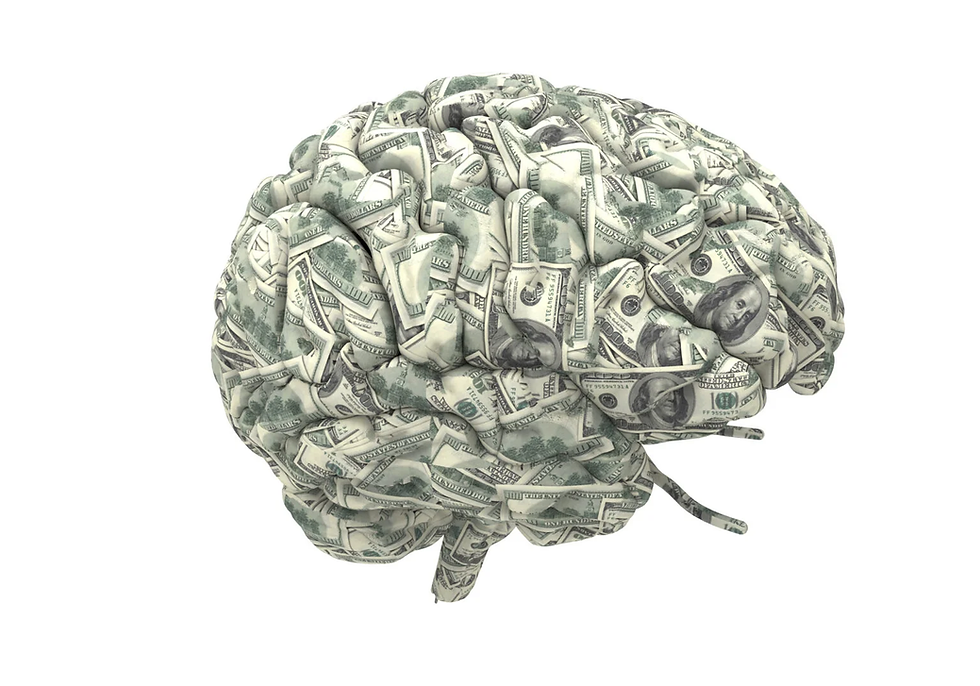
“It’s not about the money.” People say this in families, workplaces, trainings, institutions, friendships, politics, and therapy spaces. And usually they are telling the truth.
Families fracture over inheritances whose material value seems disproportionate to the intensity of the conflict. Professionals exhaust themselves for salaries that could never adequately compensate for what is being surrendered. Teams collapse over apparently minor disputes that quickly become charged with grievance, humiliation, recognition, loyalty, betrayal, or belonging. Something beyond material exchange is taking place. And yet the language of economy remains useful for thinking about groups.
Whilst not everything can be reduced to transaction, groups are always organising exchanges of some kind. Attention, legitimacy, forgiveness, innocence, admiration, authority, protection, care, prestige, certainty, permission to speak, permission to dissent, permission to remain inside the group without expulsion. Human groups distribute these unevenly and often unconsciously.
Perhaps one of the reasons economic language feels clarifying is that economies organise both values and scarcity. A group reveals itself partly through both what the group prioritises and what becomes difficult to obtain within it.
In some families, money is plentiful, but attention is scarce. In some institutions, meaningful work is in abundance, but rest becomes scarce. In some professions, ideas are numerous but uncertainty becomes scarce because certainty secures survival. In some political or activist cultures, critical thinking is abundant, but moral innocence begins to function as a scarce resource that must be constantly demonstrated and defended. In some trainings, remuneration is available for work, but legitimacy becomes scarce enough that people begin trading spontaneity for competence, curiosity for correctness, and complexity for safety.
Children often encounter these economies long before they possess language for them. A child enters a classroom and quickly learns what earns approval and what risks humiliation. One child discovers that humour protects against exclusion. Another becomes “the good one,” exchanging compliance for safety and recognition. Another learns that disappearing is safer than competing. None of this is formally negotiated. No contract is signed. Yet an emotional economy has already formed.
Psychoanalysis and group analysis have approached these questions through concepts such as unconscious alliances, social defences, projective processes, attachment dynamics, and the organisation of belonging. Economic language cannot replace these frameworks, nor should it.
But love is also not reducible to transaction or analytic theory. Care cannot be understood solely as exchange. Human relationships exceed economy constantly. And yet groups do seem to generate invisible ledgers.
People begin keeping track of who is allowed complexity and who must remain simplified. Who absorbs anxiety for the group. Who carries hope. Who becomes disposable. Who receives recognition and who survives through usefulness alone. Under pressure, these arrangements can become increasingly rigid without ever becoming fully conscious.
One of the more unsettling developments in contemporary institutional and online life is the emergence of what might cautiously be called moral economies of empathy. Empathy itself is not the problem. Without empathy, groups become brutal quickly. Collective identification with suffering is one of the ways human beings resist cruelty and fragmentation. But empathy can sometimes begin shifting from relational capacity into social currency. The pressure to demonstrate visible care intensifies. Public expressions of care acquire exchange value through professional statements, organisational messaging, online performance, and visible declarations of alignment. Empathy then risks becoming performative.
At these moments, groups may begin rewarding visible alignment over reflective complexity. Yet hatred, aggression, rivalry, exclusion, and the wish to punish do not disappear simply because a group consciously identifies with empathy. Human groups cannot organise themselves without aggression entirely. Protection requires aggression. Boundaries require aggression. Even moral condemnation contains aggressive elements. The difficulty emerges when these realities can no longer be consciously acknowledged because they interrupt the emotional coherence organising the group.
Under such conditions, aggression often becomes displaced or moralised rather than thought about directly. The group preserves an image of itself as caring while exporting hatred elsewhere. Scapegoats begin carrying disowned aggression on behalf of the collective. The difficult member, the dissenter, the whistleblower, the sceptic, or simply the person unable to fully perform emotional alignment may find themselves unconsciously tasked with holding what the group cannot bear to recognise in itself.
This may be one reason why groups organised around care, justice, healing, or moral goodness can sometimes become unexpectedly punitive. The more a group consciously identifies with empathy, the harder it may become to acknowledge hatred as belonging to the group itself. Aggression then returns indirectly through exclusion, humiliation, reputational destruction, moral certainty, social freezing, or bureaucratic punishment. The emotional tone remains empathic on the surface whilst hostility circulates underneath in disavowed form.
Understanding can then become confused with endorsement. Reflection may begin to appear emotionally withholding. Differentiation can seem morally suspect. Reflective pause can be experienced as abandoning the emotional task of solidarity itself. Under these conditions, people may begin to feel caught between complexity and belonging.
This can happen anywhere: political movements, religious systems, therapy cultures, online communities, professional trainings, families, organisations. No ideology escapes these pressures entirely. Even anti-materialist cultures develop currencies of purity, legitimacy, or virtue. Even communities organised around liberation can reproduce systems of symbolic debt and moral bargaining. The language changes. The structure often returns in another form.
Fairytales understand these dynamics with remarkable precision.
Again and again they return to bargains, hidden debts, impossible exchanges, gifts carrying concealed costs. In Rumpelstiltskin, spinning straw into gold solves the immediate crisis, but each successful exchange escalates the economy further. The bargain keeps moving forward into the future, mortgaging more and more of life itself until eventually the child becomes the price.
Many groups under pressure begin functioning in similarly deferred ways.
Institutions purchase short-term coherence at the expense of long-term thought. Teams preserve functioning through exhaustion that cannot continue indefinitely. Communities maintain belonging by narrowing speech. Individuals secure legitimacy by surrendering spontaneity, ambivalence, or dissent. The cost often remains invisible until much later, when vitality has already begun thinning out beneath the surface.
Perhaps this is partly why experiences of relative freedom can feel so disorientating: A conversation in which uncertainty does not threaten attachment A friendship where disagreement does not reorganise belonging; A group where nobody is covertly converting distress into status or debt; A relationship where care is not endlessly tracked and tallied.
These moments rarely exist in pure form. Human beings probably never escape exchange entirely.
Love itself carries asymmetries, obligations, memories, dependencies, reciprocities. There may always be some kind of ledger operating quietly at the edges of relational life.
But healthy groups may differ less in whether economies exist than in how rigidly any single economy dominates the field.
Perhaps this is one meaning of symbolic freedom: not the abolition of exchange, but the loosening of monopolies. The capacity for multiple forms of value to coexist without one swallowing all the others. A group where usefulness is not the only route to belonging. Where moral performance does not entirely replace thought. Where uncertainty remains survivable. Where people are not forced to continually convert themselves into hidden value in order to remain held by the collective.
So perhaps one of the tasks of groups is not to try to abolish exchange, which may be impossible, but to make visible the exchanges already shaping relational life.
The real question then becomes:
How does a group remain alive enough to tolerate multiple economies without allowing any one of them to become tyrannical?
If you enjoy this way of thinking and would like to bring it into your own reflective practice, I’ve gathered many of the stories, reflections and questions I use in the Into the Woods books from Spinning Circle Press.


Comments